Threat Intelligence Software Guide to Tools, Features & Implementation
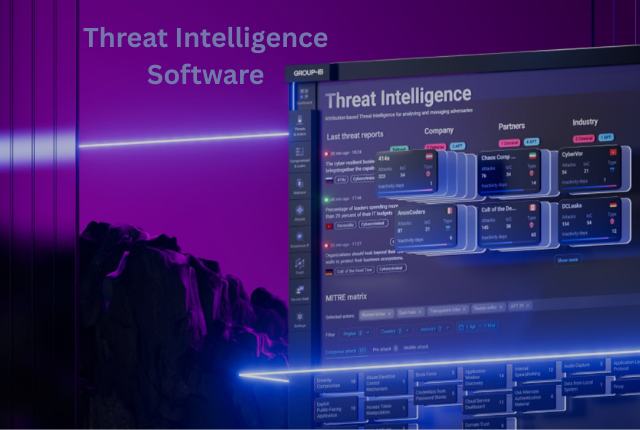
The average cost of a data breach reached $4.88 million (IBM Cost of a Data Breach Report) and organizations with mature threat intelligence programs reduced this cost by 39%. Threat intelligence software turns raw cyber threat data—like malware, phishing, ransomware, and zero-days—into actionable insights protecting organizations. This article is your complete, up-to-date guide to threat intelligence software. You’ll find some helpful techniques on how to measure ROI, the best platforms, features, and how to implement plans step by step. This is a practical guide to get the most value out of threat intelligence software. The guide is also practical and backed by data, so you won’t waste any time or money on hype. This guide is perfect for analysts in cyber security picking a tool, IT managers building security operations center(s) and CISOs who are evaluating the vendors.
Table of contents
What Is Threat Intelligence Software ?
Threat intelligence software collects, processes, correlates, and disseminates information about current and emerging cyber threats. It transforms raw data (IOC, TTPs, adversary profiles) into prioritized, actionable intelligence that security teams can use to prevent, detect, and respond to attacks faster. Threat intelligence software is specialized cybersecurity technology that gathers data from diverse sources like malware feeds, dark web scans, and attack patterns, then processes it into actionable insights. This empowers security teams to anticipate threats, prioritize vulnerabilities, and strengthen defenses against evolving risks like ransomware and phishing. It merges with SIEM systems to provide in-the-moment alerts, incident response support, and threat hunting by contextualizing the tactics of adversaries. In contrast to basic monitoring systems, it provides the organization with strategic, operational, and tactical intelligence.
Key Types of Threat Intelligence
- Strategic — High-level trends & adversary motivations (for executives)
- Tactical — IOCs, TTPs, malware signatures (for SOC analysts)
- Operational — Campaign details, infrastructure mapping (for threat hunters)
- Technical — Low-level indicators (IP addresses, hashes, domains)
Most modern platforms deliver a combination of tactical + technical intelligence with strategic summaries.
Why Organizations Invest in Threat Intelligence Software ?
- Ransomware-as-a-Service grew 78% YoY (Chainalysis)
- Mean time to identify a breach is still 197 days without good intel (IBM)
- Organizations with mature threat intel programs reduce breach costs by $1.9 million on average
Top Threat Intelligence Platforms
Enterprise-Grade Platforms (Full TI Lifecycle)
- Microsoft Defender Threat Intelligence
- Strengths: Deep integration with Microsoft ecosystem, large telemetry base
- Best for: Organizations already in Microsoft 365 / Azure
- Google Mandiant Advantage Threat Intelligence
- Strengths: Industry-leading adversary tracking (APT groups), incident response expertise
- Best for: Enterprises needing high-fidelity human-written intelligence
- CrowdStrike Falcon Intelligence
- Strengths: Fast delivery of IOCs from endpoint telemetry, excellent ransomware coverage
- Best for: CrowdStrike customers
- Recorded Future
- Strengths: Massive data lake, risk scoring, brand & vulnerability intelligence
- Best for: Organizations needing broad coverage
- Anomali ThreatStream
- Strengths: Strong enrichment, STIX/TAXII support, open-source integration
- Best for: Teams that want to ingest many feeds
Mid-Market & SMB-Friendly Options
- ZeroFox — Social media & dark web monitoring
- SOCRadar — Affordable, good dark web coverage
- Cybersixgill — Deep & dark web intelligence
- Flashpoint Ignite — Human-validated intelligence, strong insider threat coverage
Open-Source & Free Alternatives
- MISP (Malware Information Sharing Platform) — Free, open-source, very powerful
- OpenCTI — Modern, graph-based, MITRE ATT&CK integrated
- TheHive + Cortex — Incident response + enrichment
How to Choose the Right Threat Intelligence Software ?
Step-by-Step Selection Framework
- Define your use cases
- Preventative (block IOCs)?
- Detection (enrich alerts)?
- Hunting (find hidden threats)?
- Brand protection? Vulnerability intelligence?
- Map your environment
- Cloud-heavy? → Prioritize cloud-native (Microsoft, Google, CrowdStrike)
- On-prem heavy? → Look for STIX/TAXII & on-prem options (MISP, Anomali)
- Budget & scale
- SMB (<500 employees): $10K–$50K/year → SOCRadar, Cybersixgill
- Mid-market: $50K–$150K → Anomali, ZeroFox
- Enterprise: $150K+ → Mandiant, Microsoft, CrowdStrike
- Evaluate data quality & freshness
- Ask vendors for sample intelligence feeds
- Check coverage of relevant sectors & regions
- Test integration & usability
- Does it feed your SIEM/SOAR?
- Is the UI usable for analysts?
- Check support & community
- 24/7 support critical for enterprise
- Active user community = faster issue resolution
How to Implement Threat Intelligence Software Effectively ?
Planning & Scope (2–4 weeks)
- Define goals: Reduce MTTD/MTTR, enrich alerts, support threat hunting, protect brand
- Identify data sources to ingest (SIEM, EDR, firewall, email gateway)
- Map stakeholders: SOC, threat hunting, vuln management, execs
Proof of Concept (4–8 weeks)
- Select 2–3 vendors
- Run parallel POC: feed same alerts, compare quality & false positives
- Measure: time to triage enriched alert vs. raw alert
Production Rollout
- Start with one use case (e.g., alert enrichment)
- Integrate with SIEM/SOAR (Splunk, QRadar, Microsoft Sentinel)
- Train analysts (most platforms offer free training)
- Set KPIs: alert enrichment rate, false positive reduction, incidents prevented
Optimization & Maturity
- Add more feeds (dark web, paste sites, code repos)
- Create custom dashboards & reports
- Automate response for known IOCs
- Conduct quarterly reviews of intel quality
Measuring Success: KPIs for Threat Intelligence Programs
Recommended KPIs
- Enrichment Rate — % of alerts enriched with context (target: >70%)
- False Positive Reduction — % decrease after intel integration (target: 30–60%)
- MTTD/MTTR — Time to detect & respond (target: <24 hours for high-severity)
- Incidents Prevented — # of attacks stopped by proactive intel (hardest to measure)
ROI Calculation Example
- Cost of platform: $100,000/year
- Breaches avoided: 2 per year
- Average breach cost avoided: $4.88M each
- Savings: ~$9.76M
- ROI: Extremely high
Real-World Case Studies
Large Financial Institution
Large financial institutions leverage threat intelligence software to combat sophisticated fraud, phishing, and ransomware targeting high-value assets like customer data and transactions. Real-time information increases threat detection efficiency by 36%, MTTR is improved by an average of 21 minutes, and the number of compliance-related business regulatory fine- and downtime-related infraction violations is improved. Revenue is also protected and the customer trust is improved further by preventing breaches through proactive measures. Integrated Mandiant + CrowdStrike → alert triage time reduced from 45 min to 8 min per alert (Mandiant customer story).
Mid-Sized Retailer
Mid-sized retailers use threat intelligence software to shield e-commerce platforms and POS systems from rising threats like credential stuffing, supply chain attacks, and DDoS disruptions. It delivers prioritized alerts on sector-specific risks, cutting breach response times by 40% and slashing cart abandonment from outages, while automating compliance with PCI standards to avoid fines up to $100K monthly. This boosts sales continuity and customer loyalty in competitive markets. Used SOCRadar + Microsoft Sentinel → blocked 14 ransomware campaigns before encryption (SOCRadar case study).
Healthcare Provider
Threat intelligence programs give healthcare practitioners opportunities to defend themselves before ransomware attacks, data breaches, and phishing incidents, which target patient data. Meanwhile, EHR systems and IoT devices can be kept in operation with real-time threat detection and minimal interruptions. Automated risk and incident response prioritization keeps Healthcare Providers liable under HIPAA. Breach costs can exceed $10 million, and with Threat intelligence programs, Healthcare Providers can defend themselves and build patient trust. Implemented Recorded Future brand protection → identified 3 credential dumps before exploitation (Recorded Future).
Challenges & Solutions
Alert Fatigue
Alert fatigue overwhelms cybersecurity teams with excessive notifications from threat intelligence software, causing burnout and missed real threats. Threat intelligence software combats this by filtering noise, prioritizing high-risk alerts via contextual analysis, and reducing false positives—enabling focused responses on genuine dangers like ransomware.
Solution: Use risk scoring & AI prioritization (Recorded Future, Splunk).
Data Overload
Threat intelligence software tends to experience data overload when an excessively large number of threat feeds, alerts, and logs from disparate sources come in and overwhelm security teams so that they cannot analyze them in a timely fashion. If filtering processes are inadequate, teams cannot identify the most pertinent threats to an issue from the noise that comes from end points, vulnerabilities, and attack surfaces, and they end up being excessively late in response, and they furthermore cannot identify the risks. More sophisticated platforms are able to reduce the effects of this overload by providing a hierarchy of data via AI correlation and contextual scoring that serves to provide actionable data to the users of the mechanisms.
Solution: Start with high-fidelity feeds only, expand gradually.
Measuring Value
Measuring the value of threat intelligence software focuses on ROI through metrics like reduced MTTD/MTTR, fewer false positives, and cost avoidance from prevented breaches. Track quantitative gains such as 40-60% faster detection times, 30-50% alert reductions, and qualitative benefits like improved vulnerability prioritization and executive decision-making. Use frameworks like FAIR for risk-based ROI calculations, often yielding 200-350% returns in mature programs.
Solution: Track enrichment rate + incidents prevented + MTTR reduction.
Budget Justification
Budget justification for threat professional software focuses ROI/ justification for expense on risk mitigation and/ contra cost expenses and loss avoidance from breaches and improved efficiency. Share case studies that illustrate threat identification and detection improved by 30- 50%. Provide breach insights/ analyses on prospective breaches and contradictions to business objectives/ losses to business revenue. Provide breaches contracts/ analyses – show investments correlate to reduced MTTR and false positives while maintaining the business/ bottom line to resiliency against cyber threat/ risk/ exposure/ and vulnerability.
Solution: Use IBM breach cost calculator to show ROI.
Conclusion
Threat intelligence software transforms raw cyber data into proactive defense strategies, empowering organizations against evolving threats. Sophisticated alerting and the overwhelming volume of detected/threats are addressed by the software. Demonstrable ROI is achieved through mitigation of potential losses and shortened MTTR (mean time to respond). By making this sophisticated threshold monitoring and alerting software available, users can stay ahead of the ‘bad actors’ and help protect organizational assets, including sophisticated security postures.Threat intelligence software is no longer a “nice-to-have”—it’s a core component of modern security operations. The right platform can reduce breach costs by up to 39%, cut alert triage time dramatically, and give your team the context needed to stop sophisticated attacks. This guide has walked you through the best tools (Mandiant, Microsoft, CrowdStrike, Recorded Future, SOCRadar), how to choose, implement, and measure success, and how to avoid common pitfalls.
FAQs
What is threat intelligence software used for?
They are specialized tools that analyze and extract actionable data from cyber threat sources and then provide those analyses as reports. Some threat sources include malware feeds and activity on the dark web.
What are some of the main advantages of using threat intelligence tools?
Threat intelligence tools reduce time taken for response, further decreases false positives, prioritizes risks, and helps organizations be defensive and act proactively against ransomware and phishing.
What are the specific benefits to different industry sectors?
In the healthcare sector, they help protect patient data, in finance, they help deal with fraud, while in the retail sector, they help secure POS systems. All these help improve compliance, and the return on investment (ROI).