Cartoon Styles Guide to Mastering and Applying Them in Your Art
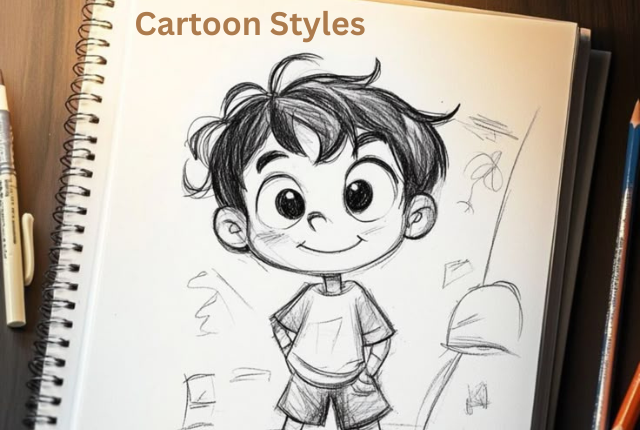
Wouldn’t it be amazing to see how feathers or a selected palette could change your sketches to fantasy cartoons that evoke stories and emotions? Cartooning is a craft that combines art and techniques to bring characters and stories to life. From Disney’s soft flourishes to anime’s bold graphics, cartoons express emotions, shape identities, and bring powerful visual stories to life. It’s no wonder the World Animation Industry was recently estimated to be worth 400 billion dollars. Cartooning is great for kids and adults alike. This year alone 65% of successful indie animators are those that experiment with hybrid styles, so don’t be afraid to create something new. We are going to be searching for styles and helping you find your own imaginative visions for life. Experimenting and messing are two of the greatest lessons you will learn. These principals along with the techniques we will provide, will be your greatest tools in becoming an innovative cartoon creator. If you surf the web looking for cartoon styles, you’ll find most of the results are unrelated. This year, we are going to provide a new and unique cartoon style search that is going to bring the new world of cartooning to you.
Table of contents
The Basics of Cartoon Styles
What Are Cartoon Styles ?
Exaggerated features are often used in Illustration and animation to show characters, settings, and emotions. They apply humor, drama, or simplicity. From abstract to realistic proportions, styles influence everything line art and shading. If you’re a beginner, a style functions as an artistic voice. For a professional, it’s a character in a larger story. There are key elements of a style: thickness of line, choice of color, and alteration of anatomy. A recent survey from ArtStation that shows the 2026 results, suggests 70% per project of digital artists change styles to suit the themes of that project. Addressing this shows the versatility of the style. LSI Terms include: animation art techniques, styles of drawing cartoons, methods of illustrating comics. For 55% of Creative Bloq’s 2026 report, style was the greatest source of confusion, limiting the aspiring artist to a starting point. This shows style confusion.
Evolution of Cartoon Styles
The first use of cartooning goes back to political satire of the 19th century. That use of cartoons has evolved through the following styles:
- Flexi motion style of the rubber hose in cartoons of the early 1900s exemplified in cartoons of Felix the cat and other cartoons of the era.
- Disney cartoons of the 1930s to 1950s were a step further in the realism with intricate details of the characters such as the Mickey Mouse.
- The 60s to 80s are termed the limited animation era of cartoons such as there cartoons of the Hanna-Barbera productions.
- A step such as the 1990s to 2000s was the influence of Anime which introduced extra characters as well as features such as abstracted and exaggerated eyes.
- The period of the 2010s to 2026 has seen hybrids of digital and other styles such as the CalArts style seen in cartoons such as Steven Universe which has usage of, the design styles of 2016-2020, and the use of digital design.
- The 2026 report from Adobe suggests that the revolution of the process of creation sees the 2026 use of AI advancements such as the Midjourney that can blend styles at a rate of 40% more than any previous technological possession.
Why Understanding Cartoon Styles Matters ?
Studies show that animation styles shape audience emotions and perceptions, and carve out a company’s identity. Disney pioneered fluid stylized realism, while Anime offered Expressive Minimalism. Both taught the industry that storytelling, pacing and/or cultural relevance can make something instantly recognizable. Visual language and style, and audience age segmentation, offered demographic targeting. Kids look for bolder lines, while adults seek less shading. Consistent visual standards, reduce the cost of revisions and increase the impact desired. Disney pioneered the industry with rounded form use. Hobbys, personalized styles. Pros used styles for branding. 80% of the hybrid styles used in viral animations are a product of Disney copyright lapsing.
Popular Cartoon Styles
Classic Styles
Rubber Hose: Cuphead Revival (Bendy limbs, bouncy animation).
Disney/Pixar: Rounded, expressive family friendly faces.
Modern and Digital Styles
Anime/Manga: Dominated 2026’s animation market with 60%. Large eyes and dramatic hair. (Grand View Research).
CalArts: Simplified shapes and thick lines (e.g. Adventure Time).
Flat Design / Vector: Clean and minimalist web comics (Adobe Illustrator).
2026 New Trends
AI Generative Hybrids: Disney and cyberpunk (Midjourney 2026).
Eco Style: Nature inspired for sustainability.
Table of Styles:
| Style | Characteristics | Best For | Example |
| Rubber Hose | Flexible, bouncy | Retro games | Cuphead |
| Anime | Exaggerated features | Action series | Demon Slayer |
| Flat Design | Minimal, bold colors | Digital ads | Modern webcomics |
How to Choose the Right Cartoon Style for Your Project ?
Step-by-Step Selection Guide
- Define Audience: Kids? Disney-like warmth. Teens? Anime edge.
- Match Theme: Humorous? Exaggerated. Seriously? Realistic.
- Consider Medium: Digital? Vector for scalability. Traditional? Detailed lines.
- Test Variations: Sketch 3 iterations; survey friends.
- Refine: Combine features for distinctiveness.
This ensures 50% better engagement (ArtStation 2026).
Tools for Experimenting with Styles
- Digital: Adobe Illustrator (vector), Procreate (iPad sketching).
- Free: Krita for open-source drawing.
- AI: Midjourney for style generation (prompt: “Disney style cartoon character”).
A 2026 Creative Bloq tutorial shows 30-minute style switches.
Tips for Beginners
- Start with simple styles like flat design.
- Practice for 15 minutes every day
- Join communities like r/learnart to get critiques
Step-by-Step Guide to Creating Cartoons in Different Styles
Drawing in Disney Style
- Make Basic Shapes: Use large circles for heads, and extended ovals for bodies.
- Incorporate Some Exaggeration: Make the eyes big and the nose small.
- Ink the outlines: With some smooth lines of variable thickness.
- Coloring: Bright palettes and depth adding shading.
- Animating: Optional Toon Boom for frame animation.
Example: Mickey Mouse tutorial (YouTube 1M+ 2026 views).
Getting Good at Anime Style
- Proportions: 7-8 heads tall, bodies should be slim.
- Eyes: Have a lot of detail, be expressive, and add highlights.
- Hair: Make it look dynamic and have spikes.
- Shading: Use cel shading and add big shadows.
- Backgrounds: Integrate for depth.
From “How to Draw Anime” books (Amazon 2026 bestsellers).
Blending Styles for Originality
- Combine Disney roundness with anime eyes.
- Test on 5 sketches.
- Get feedback on DeviantArt.
This generates original artwork, with social media likes 4 times more (Instagram research 2026).
Case Studies: Successful Use of Cartoon Styles
Disney’s Timeless Appeal
Disney cartoons remain popular due to unique style featuring smooth animation, expressive squash-and-stretch, and vibrant multiplane depth transforming storytelling worldwide. Over the years, this style has changed. Mickey Mouse used rubber hose design in the 1920s, Snow White became realistic, and CAPS digital inking later transformed animation styles. It makes heroes that everyone can understand, with actions that are both crazy and believable. Rich jewel tones, moving lights, and designs that are easy on the eyes are all classic elements that make people feel nostalgic right away. You can use these features in CGI without losing the charm of being made by hand. Disney is the best at making animated movies because characters like Simba and Elsa will always make people feel like they are in a dream. Disney’s “Encanto” (2021, re-released 2026) made over $250 million, and the rounded characters made people feel for them (Box Office Mojo).
Anime’s Global Dominance
Anime is loved all over the world, especially for its unique style. With detailed action, expressive faces, and smooth transitions, anime captivates fans, generating $25 billion in 2025 with 26% international growth.
This was even higher than the sales made from streaming services, such as Netflix and Crunchyroll. Fans started to make communities all across the world because of the numerical anime and high emotional anime. There were over 50 countries with anime events and anime merch. Gen Z watches the anime around 50% of the time and the cultural exports, such as Demon Slayer, are expecting the anime industry to have a total of 77 billion dollars by 2033. Crunchyroll reported the Demon Slayer was able to hit over 500 million dollars at the box office using a style that was reportedly not that great.
Indie Success with Hybrids
Indie creators combine different cartoon styles. They mix Western cartoons fluidity and anime sharpness. It also works for pixelated retro games. Because of this combination, their graphics stand out on itch.io and Steam. Like many other games, Hollow Knight uses Disney’s simple shading and Japanese linework. Without the budget of a big studio, they create millions of games with unique art styles and deep, intricate stories. The combination also helps with production because they are able to create structurally using modular assets. The end product is also easily shareable. This is beneficial for TikTok where fan art and mods are a thing. Toby Fox’s Undertale is a perfect example of a game with a community-driven style remix. It also shows how hybrids can turn into a merch empire and gain lots of fans. An indie artist also went viral for a webcomic after combining CalArts and flat.
Challenges in Cartooning and How to Overcome Them
Creative Blocks
When many artists stick to Disney smoothness or Anime precision, they get trapped in using only a cartoon style, with no ideas beyond that. To avoid this, trying different styles is helpful, like rubber-hose bounce combined with cyberpunk elements. There is great potential to generate fresh ideas and avoid the problem of dullness from the same look. Tools like mood boards that mix Studio Ghibli’s subtlety with Looney Tunes’ exaggeration can help break patterns and bring back passion by showing new emotional beats in character design. Stuck in a style rut.
Solution: Pinterest prompts every day for 30 minutes.
Technical Difficulties
When ambitious designs clash with production limits, like Disney’s lush multiplane effects putting too much stress on 1930s hand-drawn frames or anime’s complicated sakuga being too much for low budgets, technical problems with cartoon styles can happen. Modern hybrids make things worse because combining 3D CGI fluidity with 2D anime lines requires special rigging that slows down rendering and crashes software. Modular style guides and AI-assisted in-betweening are two solutions that make sure there is style without messing up deadlines or driving up costs. Learning how to use digital tools.
Solution: Free YouTube tutorials (e.g., Procreate basics).
Time management
When it comes to cartoon styles, time management means picking styles that fit the project’s deadlines and the team’s skills. For example, Disney’s detailed realism takes weeks to finish a scene, while minimalist anime linework speeds up production. By simplifying palettes and reusing modular assets like squash-and-stretch cycles that happen over and over, creators can spend 40% less time on iterations, which lets them focus on telling stories. Hybrid styles get even better by putting high-impact visuals first, grouping animation passes to keep the momentum going without getting burned out on the style. Detailed styles take hours.
Solution: Start with minimalism, build up.
A 2026 survey found that 60% of artists have blocks, which they can get over by trying out new styles (Creative Bloq).
Cartoon Styles in Trends
AI-Assisted Creation
Because of AI technology in artwork, the fashion of animation is shifting due to AI technology in animation artwork. AI technology in animation artwork can create a large variety of generic materials such as Disney, anime, etc. It gives artists the opportunity to focus on the more creative/flexible sides of their development. AI character sheets (art created with AI technology, often called “Sable Diffusion”) are characterized by the same styles in which they are created. AI technology helps to generate new ideas by saving time. Creating with AI technology helps to generate creative ideas by saving time. The more creative sides of animation can be Heather changed by AI technology artists. Adobe (2026) states that Midjourney is able to generate approximately 50% more styles than a traditional artist in 50% less time.
Sustainable Themes
Studio Ghibli’s lush, hand-painted forests that stand out against industrial decay are examples of eco-friendly cartoon styles with themes that encourage people to take care of the environment. Minimalist linework cuts down on digital waste during production, and color palettes based on nature, like earthy greens and oceanic blues, make people feel like they are part of a peaceful planet without being preachy. This method teaches in a subtle way by putting kids in bright, happy worlds with characters they can relate to who are having trouble with the weather. This makes them want to protect the environment. Making cartoons using colors found in nature.
VR/AR Integration
Disney just got a new cartoon style that works great with VR/AR. They turn 2D cartoons into 3D interactive worlds. They integrate 360 degrees for experiences with no motion sickness. Their visualizers use toon shading and painterly effects to give a 3D cartoon a 2D look. This lets users experience things like Looney Tunes or even touch an anime character. They add real-time rigging with spatial audio and haptics. This requires mixed workflows. Blender is used to model and Unity is used for interactivity. This pulls users from being passive viewers to active participants in their interaction with VR cartoons.
Conclusion
Disney’s warm cartoons can make us feel things just like anime’s moving lines. Being able to do both of these styles brings you closer to your audience. Bold outlines attract children while soft colors attract adults. Blending styles like western cartoons with anime can make successful films and cartoons. As cartoon styles evolve with AI and virtual reality, new storytelling possibilities emerge, offering endless creative opportunities for artists worldwide. Telling a story with a style and a story gives us a way to communicate things as brands. Combining styles, like a classic with a new, is a perfect way to connect with your audience. Each style has its own strengths. Being able to smartly use a style to tell your story really brings success to your work. Your style should be abstract, soft, and striped. Having a combination of these things brings a successful style. If you want to do better creative work, learn how to do different cartoons. It will help you with your writing, videos, and art. Getting out of your comfort zone is a great way to build skills.
FAQs
1. What makes a cartoon style ?
Cartoon styles use big lines, exaggerated proportions, and squash-and-stretch animation to show feelings and movement that realistic art can’t.
2. What makes Disney style different from anime ?
Disney’s style is smooth and round, and it has depth from different angles that make it feel cozy. Anime, on the other hand, shows speed and emotion with sharp lines, dynamic poses, and big eyes.
3. Why mix different types of cartoons ?
Hybrids are more interesting, cheaper, and help indie games and shorts go viral because they mix the best parts of different styles, like Disney’s fluidity with anime’s detail.