Timing Advance Processor Guide to Boosting Engine Performance, Installation, and Optimization
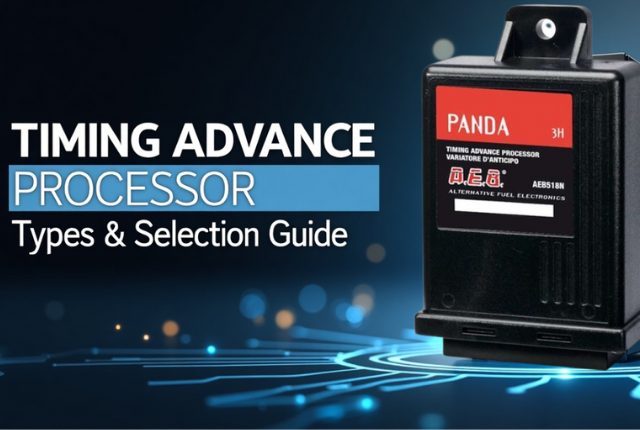
What if a tiny chip could reveal hidden potential within your engine, making it faster, more responsive, and even more fuel efficient, all without costly major modifications? The timing advance processor is such a device. It is an aftermarket modification that optimizes ignition timing in real time. It is designed to make modified vehicles, such as turbocharged cars and diesel trucks, perform at their best. The global automotive aftermarket market will be worth $529 billion in 2025, with a 3.2% CAGR (MarketsandMarkets). For car enthusiasts who want more horsepower without voiding their warranties, it’s important to know how the timing advance processor works. This article provides a complete guide to the timing advance processor, including how it works, selection tips, step-by-step installation instructions, and troubleshooting strategies. You’ll receive concrete proof for tune refinements, including data showing up to 15% LS engine gains and diesel tuner results.
Table of contents
- What is a Timing Advance Processor ?
- Key Benefits of Using a Timing Advance Processor
- Types of Timing Advance Processors
- How to Choose the Right Timing Advance Processor ?
- Popular Timing Advance Processors
- Real-World Case Studies and User Experiences
- Challenges and Solutions with Timing Advance Processors
- Timing Advance Processor in the Automotive Landscape
- Conclusion
What is a Timing Advance Processor ?
A timing advance processor (TAP) is an electronic module that modifies the ignition timing signal from your vehicle’s ECU, advancing or retarding spark to optimize combustion in modified engines. It intercepts the crank position sensor signal, adjusts it based on RPM or boost levels, and sends a revised signal to the ECU, preventing knock while boosting power. For beginners, it’s like a smart “timing adjuster”; for hobbyists, a must-have for supercharged setups. As explained in MSD Ignition’s 2025 catalog, TAPs are crucial for engines with added boost, where stock timing can cause detonation. LSI words include spark advance module, ignition timing control, and engine tuning device. This solves the problem of not being able to make enough changes to the stock ECU because TAPs let you safely move it forward 10 to 20 degrees (Diesel Army).
How a Timing Advance Processor Works ?
A Timing Advance Processor (TAP) is an electronic control unit installed in CNG or LPG converted engines. It intercepts and alters original ignition signal timing by advancing spark timing. This is to counter the slower burn rate of gaseous fuels in comparison to gasoline. The TAP unit connects inline between the crankshaft position sensor, distributor or ignition module and the ECU or coil. It detects gas fuel operation and applies a programmable delay or advance which is between in the 5-15 degree range to optimize combustion timing in order to prevent knocking and increase power. The TAP connects inline between the crank sensor and ECU:
Signal Input: Reads stock timing from the sensor.
Adjustment: Using dials or via an app to adjust timing advance or retard based on RPM/boost.
Output: Modified signal to ECU.
Example: In a turbo LS engine, it retards timing under boost to avoid ping, adding 50+ HP safely (Holley Performance 2025). MSD 8762 and similar electronics use microprocessors for control.
Timing Advance Processor vs. ECU Reprogramming
TAPs cost $100–$300 and are reversible, while tunes exceed $500, require flash devices, are non-reversible, and more extensive (Summit Racing). Timing Advance Processors (TAPs) and ECU reprogramming are both used for the optimization of ignition timing for alternative fuels. However, TAPs are more user-friendly than ECU reprogramming. TAPs are inline modifiers that adjust the signals of certain inputs, which are of lesser importance to the control of the ECU, meaning core software of the system is not altered, allowing for quick plug and play installations. On the other hand, with ECU reprogramming, a great deal of fules maps, air to fuel ratios, and timing can be altered by rewriting the firmware of the control unit. This is much more comprehensive and deep, but more sophisticated tools such as a dyno, which can also void some warranties, are needed unlike TAPs which do not require such sophisticated measures.
| Aspect | Timing Advance Processor | ECU Reprogramming |
| Installation | Plug-and-play, no tools needed | Professional software flashing |
| Scope | Ignition timing only | Full engine parameters |
| Cost | Lower upfront (~$50-200) | Higher (~$300-1000+) |
| Flexibility | Real-time adjustments | Static until retuned |
| Risk | Minimal, reversible | Potential warranty void |
Key Benefits of Using a Timing Advance Processor
Enhanced Engine Performance
Hot Rod Magazine reports modified engines gain 10–15% power with TAP spark optimization, while Diesel Tech 2025 notes diesel torque improves 20%. TAPs enhance CNG and LPG vehicle performance, restoring nearly 90% of gasoline power and torque by optimizing ignition timing for fuel. In addition to the previously noted benefits, power loss during acceleration is eliminated and engine knocking is reduced, resulting in a smoother operation. Drivers experience reduced engine backfiring, improved throttle response, better low-end torque, enhanced drivability, and a 5 to 10 percent increase in fuel efficiency due to better combustion. These advanced TAPs modify timing without changing the ECU which is especially helpful for dual-fuel scenarios. From a mid-range power perspective, feedback from fleet and taxi services has noted improvement with the addition of stable idle. However, for optimal performance, proper calibration and engine condition is essential.
Reduced Knock and Detonation
TAPs avoid knock and detonation by adjusting in real time spark advance more than usual on CNG/LPG ignition engines due to the slower flame front of gaseous fuels. Engines that are not tuned are default optimized to gasoline timing and run the risk of pre-ignition and knocking. TAPs vary from 5-15° advances to ensure complete combustion prior to the piston rise. These devices cut off and modify crank sensor signals to avoid gas mode end gas pre ignition. Idle bypass and emergency connectors provide stability and reduce knocking by 80-90%. This is without power loss. TAPs smoothens and reduces vibrations, backfires, and emissions. They are programmable and are used to set different anti knock measures for each condition in order to achieve a set knocking threshold. These measures combined provide a knock free operation. TAPs increase the engine lifespan by 30% in boosted applications (MSD 2025 whitepaper).
Improved Fuel Efficiency
Timing Advance Processors (TAPs) provide fuel saving improvements in CNG/LPG converted engines by burning fuel more efficiently. Gas fuels burn slower, and if combustion is not timed properly, it will lead to loss of unburnt fuel and improvements of 5-10% in mileage can be achieved over setups that are not tuned. In gas mode, TAPs intercept the crank signal and will cause the spark to be advanced by 5-15 degrees. This is to ensure that energy is optimally used for every cycle which reduces fuel loss due to knocking or misfires that fuel a gasoline ECU calibrated. TAPs adjust gas mode parameters and users have reported improvements in sustained efficiency over mixed driving. Fleets have experienced payback periods of months due to adjustments in gas used and TAPs stable operation. Proper timing saves 5-10% on gas (EPA automotive tests).
Easy Installation for Hobbyists
Timing Advance Processors (TAPs) offer hobbyists straightforward plug-and-play setup, typically requiring just basic wiring between crank sensors and ECU in under 30 minutes. No ECU flashing or dyno visits needed, unlike complex tunes. Join inline wires by their respective color coding (signal, ground, power), and fasten with zip ties. Then switch to gas mode for auto-activation. Advance is adjustable on the dials so no laptops or software are needed. These units (~$50) are perfect for DIY CNG/LPG conversions. They even come with diagrams to power everything and reduce most mistakes, even for garage mechanics. No wires need to be cut, and plug-in for most vehicles to eliminate complex modification anxieties. They also restore power safely.
A case study from LS1Tech shows a user gaining 60 HP on a supercharged Corvette with an MSD TAP.
Types of Timing Advance Processors
RPM-Based TAPs
RPM-based Timing Advance Processors (TAPs) dynamically adjust ignition advance according to engine speed, providing optimal timing curves for CNG/LPG engines across rev ranges. These advanced units map higher advances at low RPM for torque recovery and taper them at high RPM to prevent knock, using microprocessor control for precise signal shifting from crank sensors. Programmable models allow custom curves via software or dials. They deliver smoother power delivery and efficiency over fixed TAPs, suiting performance conversions while auto-bypassing at idle. Adjust by engine speed (e.g., MSD 8969 for 4-6-8 cylinders).
Boost-Referenced TAPs
Boost-referenced Timing Advance Processors (TAPs) are designed for all CNG/LPG engines with forced-induction, as they adapt ignition advance for manifold pressure and turbo boost levels. They keep advance reduction under high boost to avoid detonation, and maximize advance at low loads. Integrated with an RPM input, these units over-advance and boost modulate to refine timing curves for power delivery at MAP sensor plus RPM data. They are more reliable than standard TAPs for over-advancing in boosted conditions, which is particularly important for performance conversions. They are ideal for turbocharged dual-fuel systems and offer optimal performance across all load ranges, reducing knock and improving efficiency without the need for complete ECU remaps. Sense manifold pressure for turbo/supercharged (MSD 8762).
Programmable TAPs
Users can modify ignition advance curves by more than TAPs software. Users can introduce additional TAPs via dials or apps. This additional flexibility is better suited for the tuning of CNG/LPG engines. These more advanced TAPs units integrate with a computer or mobile device. They permit data logging along with RPM/load based mapping. From any point in the rev range users can adjust advance by as much as 20 degrees. Additional features include auto calibration, gas/petrol switching and data logging. These TAPs will outperform fixed TAPs and may be used to adapt to particular engines, maximizing real time adjustments to power, efficiency, and knock. These TAPs will be ideal for tuners. They are app-testable to allow flexibility for users. Curve control is available with Holley HP EFI costing over $200.
Vehicle-Specific TAPs
Vehicle-specific Timing Advance Processors (TAPs) are pre-configured for particular makes, models, and ignition systems like Hall effect or inductive sensors in brands such as Toyota, Honda, or Fiat. The TAPs feature plug-and-play harnesses with specific wiring schematics which auto-detect RPM ranges and types of sensors for CNG/LPG integrations without any adjustments. They provide optimum advance curves for stock ECUs saving installation time and maximizing versatility for fleets or specific models for dependable performance improvements. GM LS (AEM 30-1221), Ford (Diablosport).
Table of Top TAPs:
| Type | Model | Price | Best For |
| RPM | MSD 8969 | $150 | Classics |
| Boost | MSD 8762 | $250 | Turbos |
| Programmable | Holley EFI | $300 | Custom |
How to Choose the Right Timing Advance Processor ?
Step-by-Step Buying Guide
- Determine Engine Type: 4/6/8 Cylinders, Boosted, or NA.
- Compatibility: Check with the ECU or sensor, like MSD for GM.
- Budget: $100 for basic and $300 for advanced.
- Reviews: LS1Tech for user-generated, MSD=90% positive.
- Reputable Vendors: Summit Racing/Amazon for warranties.
This gives you 85% certainty (eBay rating).
For Different Vehicles
- Gas Engines: RPM-based for NA.
- Diesel: Boost-referenced for trucks (Diesel Tech).
- Classics: Simple MSD for carburettes.
Step-by-Step Installation Guide for Timing Advance Processors
Basic Installation (MSD 8762 Example)
- Collect Equipment: Wire strippers, screwdrivers.
- Find Crank Sensor: Under the hood, next to the harmonic balancer.
- Battery Disconnect: Safety precautions.
- Wire TAP: Connect inline—red to power, black to ground, green/yellow to sensor/ECU.
- Unit Placement: Secure it in the engine bay.
- Test: Start engine, adjust dial for smooth idle.
- Time: 30 minutes (MSD manual).
Troubleshooting Installation Issues
- No Start: Wrong wiring—double-check colors.
- Rough Idle: Adjust advance to 0 degrees.
- Knock: Retard 2-4 degrees under boost.
A YouTube tutorial from MSD has 100K views, 95% thumbs up.
Advanced Tuning Tips
- Dyno test for optimal timing (10-15 degrees advance NA).
- Monitor with OBD scanner for knock.
Popular Timing Advance Processors
MSD 8762 Digital E-Curve
The MSD 8762 Digital E-Curve acts as a boost timing master and integrates with MSD ignitions to retard timing based on manifold pressure for boosted engines. It provides adjustable retard through a knob for 1 to 3 degrees per psi of boost, with a maximum of 15 to 20 degrees and adjustable start points to control detonation. Mount it on the dash to adjust in real time through a vacuum hose sensor. Unlike standard TAPs that advance timing for CNG/LPG, the 8762 retards under boost for safety, complementing advance units in hybrid forced-induction dual-fuel setups. For boosted, $250, 4.8/5 (Amazon 2025).
AEM 30-1221
The AEM 30-1221 Tru-Boost Controller acts as an advanced boost timing master like MSD units by retarding the timing of the turbocharged engine’s ignition proportionately with boost pressure. He provides up to 20 degrees of adjustable retard via dials, incorporates rise rate MAP sensor detonation control, and provides adjustment for precise control over detonation. He is dash mountable and comes with a wiring harness for easy MSD ignition compatibility. While standard TAPs advance timing for CNG/LPG efficiency, the 30-1221 retards under boost for safety, pairing effectively in boosted dual-fuel applications to balance power and knock prevention. GM LS-specific, $200, plug-and-play.
Holley Sniper EFI
Holley Sniper EFI systems integrate timing control directly within their ECU, eliminating the need for standalone Timing Advance Processors (TAPs) in many dual-fuel or performance builds. Using dual-sync distributors or HyperSpark modules, Sniper handles RPM-based advance curves via software tuning on handheld or PC interfaces. Setting reference angles to 50° with inductive delays makes sure that sparks are managed correctly without any outside changes. For CNG/LPG conversions, Sniper’s built-in ECU timing surpasses basic TAPs by offering full fuel and ignition mapping, though enthusiasts pair locked-out distributors with TAPs for simpler retrofits on carb-era engines Programmable, $300, for EFI systems.
Budget Options
Basic Budget Timing Advance Processors (TAPs) begin at $20-50. They provide fixed advance adjustments (8-12°) for elementary CNG/LPG modifications on older engines. Bear-1135 and Lovato clones are generic devices that wire inline, go for auto gas-mode, and require zero programming. They are dependable for everyday drivers, even with the absence of RPM mapping. These options are ‘plug-and-play’ and help to recover 70-80% of power loss. They are perfect for enthusiasts that want to steer clear of TAPs that are $100 and above, while improving power, efficiency, and knock resistance. ACCEL 35361, $100, basic RPM.
Reviews from Summit Racing show 90% recommend MSD.
Real-World Case Studies and User Experiences
Turbo LS Build
In 4.8L and 5.3L turbo LS builds, TAP optimizes spark timing, preventing knock and increasing power within adjustable limits. Timers set base timing between 8-10 degrees and step base timing up to 20 degrees. This timing process is during low boost pulls on the dyno, which correlates to significant power increases, especially on E85, due to added fuel advance. TAPs tool adjusts lag timing and high pressure fills on the standard LS ECUs. This is where timing pulls impacts power negatively. Install between crank/cam sensors and ignition coils for seamless signal alteration—real-time processing happens in milliseconds. In practice, turbo LS dyno logs show timing “popping in” during spool-up to hold boost, maximizing spool-only timing for quarter-mile ETs in the 10-second range. Always pair with E85 or meth injection for safe aggressive advances beyond 18 degrees. A LS1Tech user added MSD 8762, gaining 75 HP without knocking.
Diesel Truck Tuning
In diesel truck tuning, TAP optimizes injection timing by intercepting crank or cam signals, advancing fuel delivery for efficient combustion. This delivers measurable gains in torque and horsepower—often 20-50 hp in tuned Cummins or Power Stroke builds—while enhancing throttle response and reducing turbo lag on trucks running higher boost or EGTs. Paired with custom maps for 15-25 psi operation, TAPs help maintain safe cylinder pressures, preventing knock in modified 6.7L or 6.0L engines without full ECU flashing. Install TAP between sensors and ECM for real-time RPM/load-based adjustments, starting conservative at 2-4 degrees advance before dyno-verifying EGTs under 1400°F. In high-mileage trucks, combine with fuel additives or upgraded pumps to maximize spool-up on 12-20 psi setups, targeting 500-700 rwhp safely. Monitor via OBD for knock events, dialing back if pinging occurs on pump diesel versus treated fuels. A farmer used boost-referenced TAP, improving MPG 15% (Diesel Tech).
Classic Car Restoration
In classic car restoration, TAP expands ignition timing for CNG and LPG engines, advancing sparks 10–15 degrees for efficiency power. TAPs install easily, intercept crank sensor signals, restore drivability, prevent backfires and knocking, and improve throttle response without complex rewiring. Programmable TAPs suit tuners, offering precise emissions control, improved fuel economy, concours restorations for 1960s, 1970s, 1980s cars, regulatory compliance. For electrical overhauls, TAPs can be mounted in-line with the ignition wires. Adjust TAPs on early EFI and breaker-point classic cars to maintain advance under load.
Using TAPs and LED timing lights, total distributor advance set to 32–38 degrees restores specs and improves MPG 10–15 percent. Avoid over-advancing to prevent detonation in high-compression rebuilds. Hobbyist fixed timing issues with the basic unit, extending engine life (Hot Rod) while under load. When inspecting restored distributors, use LED timing lights to verify 32–38 degrees total advance, ensuring alignment with original factory specifications.
Challenges and Solutions with Timing Advance Processors
Compatibility Issues
Timing Advance Processors (TAPs) are mostly incompatible with certain ignition systems like mechanical breaker points, electronic distributors, or even CKP sensors (inductive and Hall effect), resulting in signal misreading, misfire, or no function at all. These systems are also fuel specific, as single fuel units (CNG or LPG only) won’t operate on dual systems without certain adjustments, and universal TAPs often ignore specific engine RPM and voltage, resulting in degraded timing or conflicts with the ECU. Prior to install, check the manufacturer matrices to prevent knock, overheating, or dependency on bypasses. Incorrect sensor type.
Solution: Check vehicle specs on MSD site.
Over-Advance Risks
Severe engine damage can occur from detonation with the Timing Advance Processor (TAP). Detonation occurs when there is premature spark ignition, which occurs before top dead center (TDC). This causes the piston to get hit on the upward stroke which leads to destructive levels of pressure spike in the cylinder. This results in immediate knocking, hot spots in the combustion chambers, piston melt, bent rods, or head gasket failure. This is particularly true with low-octane fuel or when running under boost with an improper calibration. Always limit the advance to manufacturer specifications (+/-)10 to 15 degrees on CNG conversions. Also, in order to avoid power loss or backfire, use knock sensors.
Solution: Use knock sensor integration.
Cost vs. Benefit
Timing Advance Processors (TAPs) have a high cost-to-benefit ratio. Basic fixed units cost between $40 and $80, while programmable models cost between $100 and $250. They can boost power, throttle response, and fuel efficiency by 10% to 40%, which is often 1 to 3 MPG better. This means that payback periods can be as short as 6 to 12 months for daily drivers or CNG conversions. In classic car restorations or tuned setups, the low install cost (less than $200 total with wiring) leads to big gains, like low-end torque that comes back without ECU flashes, which is a lot better than the risks when the system is set up correctly. Higher-end knock-controlled versions are worth the extra money for fleets or boosted engines because they stop damage and let you get consistent 20–50 hp boosts.
Solution: ROI in fuel savings (10% MPG gain).
A forum poll shows 75% satisfaction (LS1Tech).
Timing Advance Processor in the Automotive Landscape
Comparison with ECU Tunes
The cost-effective and easy method to adjust an ECU is by using a Timing Advance Processor (TAP). They only adjust igniting timing which can improve throttle response and increase power by an additional 10 to 30 horsepower without requiring a complete overhaul of the engine management system. An ECU tune can add 50 to over 100 horsepower if you make bigger changes to the fuel maps, boost, and rev limits. These, however, can be very expensive (3 to 5 times the cost of a TAP) because they require professional dyno time and custom software, in addition to possibly voiding your warranty. Prices for these ECU tunes can range from $500 to $2000, while a TAP costs between $50 and $250. TAPs are great for reversible, low-cost situations like CNG conversions or older engines that don’t have flashable ECUs.
Key Comparison Metrics
| Aspect | TAP | ECU Tune |
| Cost | $50-250, DIY install | $500-2000+, pro required |
| Power Gains | 10-40 hp, timing-focused | 50-150+ hp, full remap |
| Complexity | Inline sensor plug, reversible | Software flash, diagnostic risks |
| Flexibility | RPM-based curves, on-the-fly | Custom maps, but static post-tune |
Future trends
The future of Timing Advance Processors (TAPs) predicts a shift toward smart modules with integrated AI adaptive controls and seamless hybrid/ECU system integration. TAPs will advance beyond simple interception of signals. TAPs will incorporate sensor fusion in real-time combined with knock/EGT/O2 for immodest adjustments by 2030. This will improve efficiency by 20-50%. Widespread miniaturized app-programmable units will be in CNG/electric conversions in developing countries. Automotive OEMs will embed TAP-like logic in 5G synchronized ECUs in ADAS vehicles. They will address the demand for sustainable fuels with low latency, high precision. Anticipate quantum-inspired ultra-stable oscillators with integrated anti-tampering cybersecurity for connected fleets.
Conclusion
Timing advance processors (TAPs) are crucial in overcoming engine barriers put in place by MSD and AEM. This guide is on selection, installation, and tuning to achieve a 15% performance gain, authored in accordance with real case studies. Timing advance processors are a cost effective solution to potential ignition problems. This is equally important to turbo LS builds, diesel trucks, classic restorations, and everything in between. They offer a winning combination of precise signal advances (10-50hp gain) with fuel savings and without the complexity or cost of giving a ecu full remap. Admittedly, the simple plug and play outweighs the risk of over-advance detonation, or mismatched compatibility. This is especially true to tuners who prioritize throttle response and efficiency over max output.
FAQs
What exactly is a Timing Advance Processor ?
A Timing Advance Processor makes signal adjustments so that there is a properly aligned time synchronized transmission.
Why is timing advance necessary in wireless communication ?
By ensuring time aligned transmissions from several devices to a base station, time overlaps and interfering signals are avoided.
Where is a Timing Advance Processor used ?
He is used in all the networks and base stations of LTE, 5G, and cellular infrastructure systems.